
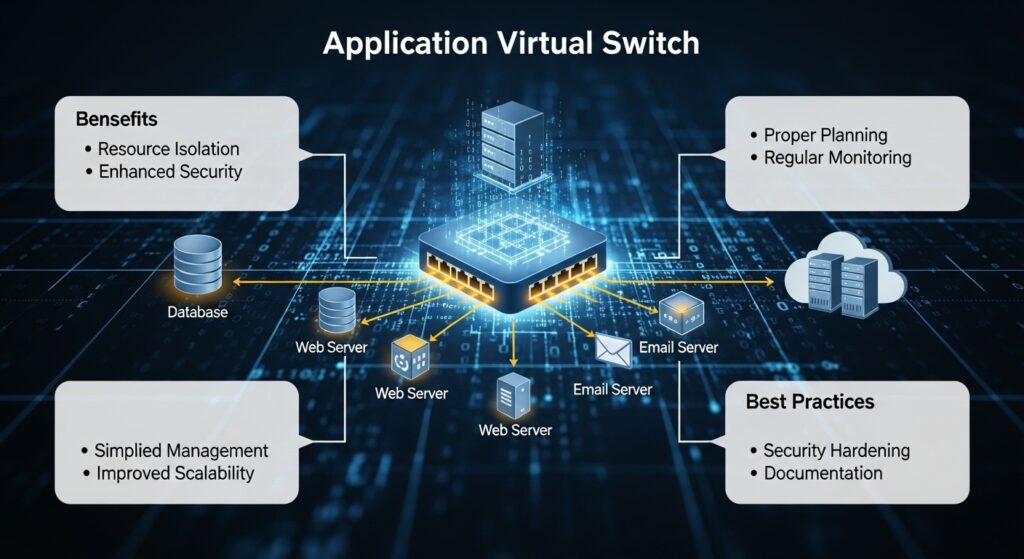
In today’s fast-paced digital landscape, efficient networking is more crucial than ever. Enter the Application Virtual Switch (AVS), a game-changing technology that promises to streamline communication between virtual machines and enhance overall network performance. As organizations increasingly shift towards cloud computing and virtualization, understanding how an AVS can transform your infrastructure becomes essential. This innovative solution not only optimizes traffic management but also provides robust security features tailored for modern enterprises. Ready to dive into the world of application virtual switches? Let’s explore what makes them an invaluable asset for businesses striving for efficiency and agility in their networks.
Benefits of Using an Application Virtual Switch
An Application Virtual Switch (AVS) offers numerous advantages for modern networks. One of the primary benefits is enhanced flexibility. It allows organizations to adapt their network configurations without needing extensive hardware changes.
With AVS, businesses can improve resource allocation. This means virtual machines can communicate directly with one another, optimizing performance and reducing latency.
Security also sees a boost through isolation capabilities. By segmenting traffic within applications, sensitive data remains protected from potential breaches.
Moreover, an AVS simplifies management tasks. Administrators gain centralized control over network policies and monitoring tools, streamlining operations significantly.
Cost-efficiency stands out as a major benefit too. Reducing reliance on physical switches lowers both capital expenditures and operational costs while maintaining high levels of performance and reliability across the board.
Key Features and Capabilities of an Application Virtual Switch
An Application Virtual Switch (AVS) offers robust capabilities that enhance network performance. One key feature is its ability to facilitate seamless communication between virtual machines (VMs). This ensures efficient data transfer within a cloud environment.
Another significant capability is advanced security integration. An AVS provides mechanisms like micro-segmentation, enabling organizations to enforce strict access controls and reduce potential vulnerabilities.
Moreover, the scalability of an AVS cannot be overlooked. As businesses grow, their networking needs evolve. An AVS can adjust dynamically, accommodating increased traffic without sacrificing performance.
Monitoring tools bundled with an AVS offer real-time insights into network health and usage patterns. These analytics empower IT teams to make informed decisions about resource allocation and troubleshooting.
Compatibility with various hypervisors makes it versatile across different environments. Whether in private clouds or hybrid setups, an AVS adapts smoothly to existing infrastructure requirements.
Best Practices for Implementing an Application Virtual Switch
When implementing an Application Virtual Switch, start with a clear network design. Understand your requirements and how the AVS will fit into your architecture. This foundational step prevents future complications.
Next, ensure proper configuration of security parameters. An AVS can enhance security by isolating traffic flows but requires careful setup to prevent vulnerabilities.
Regular monitoring is essential for optimal performance. Utilize tools that provide insights into switch activity and troubleshoot issues proactively.
Documentation cannot be overlooked. Keeping detailed records of configurations and changes aids in future maintenance efforts.
Training staff on using the Application Virtual Switch is vital. Well-informed personnel can maximize its capabilities and respond effectively to challenges as they arise.
Case Studies: How Companies Have Utilized AVS in Their Networks
A leading financial institution adopted an Application Virtual Switch (AVS) to enhance its network performance. By integrating AVS, they streamlined data traffic across multiple virtual machines, improving transaction speeds significantly. The result? Faster service delivery and a better customer experience.
In the healthcare sector, a large hospital network implemented AVS to ensure seamless connectivity between medical devices and administrative systems. This approach reduced latency issues and enhanced data reliability during critical operations.
An e-commerce giant also leveraged AVS for improved scalability during peak shopping seasons. By dynamically allocating resources via the virtual switch, they managed increased user traffic without downtime or degraded performance.
These examples illustrate how diverse industries are capitalizing on the capabilities of Application Virtual Switches, optimizing their networks in innovative ways while addressing unique challenges. Each case reflects tailored strategies that demonstrate real-world applications of this technology in enhancing operational efficiency.
Challenges and Considerations
While implementing an Application Virtual Switch (AVS) offers many advantages, it’s important to recognize potential challenges. One significant hurdle is the complexity of setup and configuration. Organizations may require specialized knowledge to deploy AVS effectively.
Performance can also be a concern. If not managed correctly, virtual switches might introduce latency in network traffic, undermining their intended benefits.
Security must be prioritized as well. A misconfigured switch could expose sensitive data or create vulnerabilities within the network architecture.
Moreover, compatibility issues with existing hardware or software can arise during deployment. Ensuring seamless integration with current systems requires careful planning and testing.
Ongoing management and monitoring are vital but can become resource-intensive over time. Adequate training for IT staff is essential to navigate these complexities efficiently while maximizing the performance of your AVS environment.
Conclusion: Is an Application Virtual Switch Right for Your Network?
When it comes to enhancing your network infrastructure, an Application Virtual Switch (AVS) offers compelling advantages. Its ability to streamline connectivity and improve resource management is significant for organizations looking to optimize their operations. The flexibility of AVS allows seamless integration with existing systems while enabling advanced features like traffic segmentation and security protocols.
Evaluating whether an AVS is suitable for your network involves considering specific needs and goals. Understanding its benefits, capabilities, and best practices can guide you in making informed decisions tailored to your organizational requirements. It’s essential to analyze the unique aspects of your environment alongside potential challenges that may arise during implementation.
As networks continue evolving, keeping pace with technological advancements becomes crucial. An Application Virtual Switch could be a valuable addition if you’re aiming for enhanced performance and scalability in your network setup. Assessing how well this solution aligns with your operational objectives will determine its fit within your organization’s framework.